How childhood wounds attach to global instability — and why love remains the only structure strong enough to hold light and dark together
We are living in a time where fear travels faster than truth, where devastation is amplified across every platform, and where even the weather is described in language designed to keep us unsettled. In the midst of this instability, I find myself returning again and again to the only thing that feels structurally sound — love — not as sentiment, but as the connector strong enough to hold light and dark without collapsing into fear.
There are mornings when everything I read feels synchronistic, as though the interior movement of my soul is being reflected back to me through multiple sacred texts at once, and this morning was one of those mornings where love, faith, and trust kept surfacing as the only stable ground in a world that feels increasingly upside down, inside out, and backwards.
The image of in ancient times of Jesus breaking bread with the disreputable the tax collector Zacchaeus and accepting him in all of his unacceptableness when I read it, moved something deep within me, because it mirrors what I have known since I was eleven years old — that I was here to teach people how to love themselves — although what has evolved and expanded and deepened over time is the realization that this calling is not simply about teaching self-love in a conceptual way, but about loving the unloveable into loving themselves so that they can love others in return, which feels less like a career and more like a cosmic responsibility woven into the fabric of my being.
“What you do to the very least of these you do to me” has always felt expansive to me, not in a sentimental sense but in a way that speaks directly to the rejected, the misunderstood, the parts of humanity and the parts of ourselves that we would rather not claim, because if love is the connector between light and dark then it must be strong enough to hold both without collapsing into denial or condemnation.
Thomas Merton’s words landed in me this morning with unusual clarity:
“Sorrow at the fabulous confusion and violence of this world, which does not understand his love – yet I am called not to interpret or condemn this misunderstanding, only to return the love, which is the final and ultimate truth of everything…”
And, in a time where confusion and violence are amplified across every platform, where devastation and destruction are broadcast in real time and even the weather is described in terrifying language meant to increase viewership and maintain attention, it becomes increasingly important to notice how easily fear attaches itself to unresolved inner wounds, particularly the fear of abandonment that is so often rooted in childhood and remains dormant until something external activates it.
A child instinctively knows that survival depends upon the availability of mother and father, and when one or both parents are unavailable emotionally, physically, financially, or spiritually, the child’s undeveloped psyche registers what feels like a threat to existence itself, embedding the fear of loss of existence so deeply that later in life politics, ecological instability, economic uncertainty, and even storms can feel like confirmation that survival is again at risk.
Unhealed trauma makes one susceptible to webs of misdirection because the fear is already coursing through the system, and fear-mongering tactics gain traction precisely because they attach to wounds that have not yet been named or healed. The only way out of that fear is to go back through it, all the way back to its origins, reclaiming self-trust and faith in oneself through time, patience, humility, and baby steps, until self-esteem elevates to the point where external input no longer dictates internal stability and attachment to outcome begins to loosen.
Once a person navigates inward and locates their own INNER net, they are freed by trusting in their guidance, their intuition, their vibrations, their thoughts, their values, their beliefs, which is where the true power lies — in what cannot be seen, in the dark matter that surrounds us where more action is occurring than in anything we perceive with our five senses.
The Tao reminds us that study alone is not enough, that we must express ourselves, take action in the world, create new circumstances for ourselves and others, because life continues to be thorny and problematic even after years of spiritual discipline, and the long acquisition of skill only becomes worthwhile when it is embodied.
Another meditation spoke of peace not being the result of money, possessions, insurance, or security systems, but as something independent of circumstances, which runs counter to everything the external world conditions us to believe and challenges us to locate peace inwardly rather than attempting to secure it externally.
Modern day Mystic, James Finley’s teaching on the finite self and the infinite self has deepened this understanding in me profoundly, because the finite self exists within the measurable span of birth, life, and death, while the infinite self has no beginning and no end, energy not expanding or contracting but simply changing form, which reframes death not as extinction but as transition. My relationship with my father since his passing has strengthened this knowing, as I experience him now in a deeper and more loving way, sensing his presence and guidance especially in moments of difficulty, understanding that the relationship did not end but changed form within an infinite system.
Within that awareness, loving the unloveable feels less like a task and more like participation in a larger design, because when one person is loved into loving themselves, the whole shifts positively, subtly, quietly, in ways that are not always visible but are nonetheless real. Perhaps this is why loving the unloveable has always felt less like a choice and more like a calling for me. Because when childhood wounds are healed rather than projected, when fear is traced back to its origin instead of attached to headlines, and when we remember that we are part of something infinite rather than fragile and finite, the world does not suddenly become stable — but we do. And from that inner steadiness, love stops being an idea and becomes the quiet force that shifts the whole.
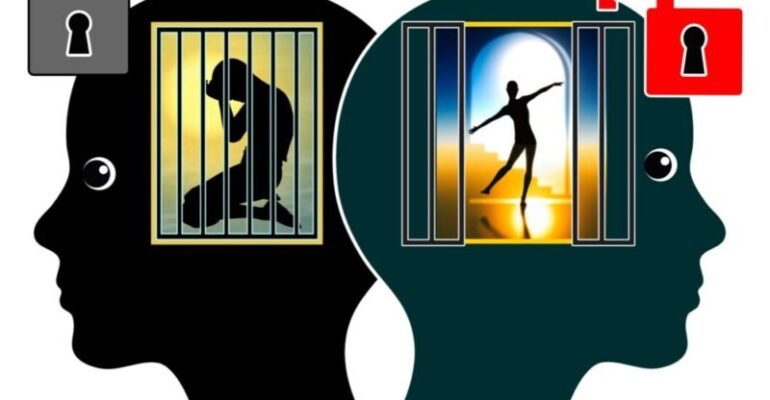
How childhood wounds attach to global instability — and why love remains the only structure strong enough to hold light and dark together
We are living in a time where fear travels faster than truth, where devastation is amplified across every platform, and where even the weather is described in language designed to keep us unsettled. In the midst of this instability, I find myself returning again and again to the only thing that feels structurally sound — love — not as sentiment, but as the connector strong enough to hold light and dark without collapsing into fear.
There are mornings when everything I read feels synchronistic, as though the interior movement of my soul is being reflected back to me through multiple sacred texts at once, and this morning was one of those mornings where love, faith, and trust kept surfacing as the only stable ground in a world that feels increasingly upside down, inside out, and backwards.
The image of in ancient times of Jesus breaking bread with the disreputable the tax collector Zacchaeus and accepting him in all of his unacceptableness when I read it, moved something deep within me, because it mirrors what I have known since I was eleven years old — that I was here to teach people how to love themselves — although what has evolved and expanded and deepened over time is the realization that this calling is not simply about teaching self-love in a conceptual way, but about loving the unloveable into loving themselves so that they can love others in return, which feels less like a career and more like a cosmic responsibility woven into the fabric of my being.
“What you do to the very least of these you do to me” has always felt expansive to me, not in a sentimental sense but in a way that speaks directly to the rejected, the misunderstood, the parts of humanity and the parts of ourselves that we would rather not claim, because if love is the connector between light and dark then it must be strong enough to hold both without collapsing into denial or condemnation.
Thomas Merton’s words landed in me this morning with unusual clarity:
“Sorrow at the fabulous confusion and violence of this world, which does not understand his love – yet I am called not to interpret or condemn this misunderstanding, only to return the love, which is the final and ultimate truth of everything…”
And, in a time where confusion and violence are amplified across every platform, where devastation and destruction are broadcast in real time and even the weather is described in terrifying language meant to increase viewership and maintain attention, it becomes increasingly important to notice how easily fear attaches itself to unresolved inner wounds, particularly the fear of abandonment that is so often rooted in childhood and remains dormant until something external activates it.
A child instinctively knows that survival depends upon the availability of mother and father, and when one or both parents are unavailable emotionally, physically, financially, or spiritually, the child’s undeveloped psyche registers what feels like a threat to existence itself, embedding the fear of loss of existence so deeply that later in life politics, ecological instability, economic uncertainty, and even storms can feel like confirmation that survival is again at risk.
Unhealed trauma makes one susceptible to webs of misdirection because the fear is already coursing through the system, and fear-mongering tactics gain traction precisely because they attach to wounds that have not yet been named or healed. The only way out of that fear is to go back through it, all the way back to its origins, reclaiming self-trust and faith in oneself through time, patience, humility, and baby steps, until self-esteem elevates to the point where external input no longer dictates internal stability and attachment to outcome begins to loosen.
Once a person navigates inward and locates their own INNER net, they are freed by trusting in their guidance, their intuition, their vibrations, their thoughts, their values, their beliefs, which is where the true power lies — in what cannot be seen, in the dark matter that surrounds us where more action is occurring than in anything we perceive with our five senses.
The Tao reminds us that study alone is not enough, that we must express ourselves, take action in the world, create new circumstances for ourselves and others, because life continues to be thorny and problematic even after years of spiritual discipline, and the long acquisition of skill only becomes worthwhile when it is embodied.
Another meditation spoke of peace not being the result of money, possessions, insurance, or security systems, but as something independent of circumstances, which runs counter to everything the external world conditions us to believe and challenges us to locate peace inwardly rather than attempting to secure it externally.
Modern day Mystic, James Finley’s teaching on the finite self and the infinite self has deepened this understanding in me profoundly, because the finite self exists within the measurable span of birth, life, and death, while the infinite self has no beginning and no end, energy not expanding or contracting but simply changing form, which reframes death not as extinction but as transition. My relationship with my father since his passing has strengthened this knowing, as I experience him now in a deeper and more loving way, sensing his presence and guidance especially in moments of difficulty, understanding that the relationship did not end but changed form within an infinite system.
Within that awareness, loving the unloveable feels less like a task and more like participation in a larger design, because when one person is loved into loving themselves, the whole shifts positively, subtly, quietly, in ways that are not always visible but are nonetheless real. Perhaps this is why loving the unloveable has always felt less like a choice and more like a calling for me. Because when childhood wounds are healed rather than projected, when fear is traced back to its origin instead of attached to headlines, and when we remember that we are part of something infinite rather than fragile and finite, the world does not suddenly become stable — but we do. And from that inner steadiness, love stops being an idea and becomes the quiet force that shifts the whole.
How childhood wounds attach to global instability — and why love remains the only structure strong enough to hold light and dark together
We are living in a time where fear travels faster than truth, where devastation is amplified across every platform, and where even the weather is described in language designed to keep us unsettled. In the midst of this instability, I find myself returning again and again to the only thing that feels structurally sound — love — not as sentiment, but as the connector strong enough to hold light and dark without collapsing into fear.
There are mornings when everything I read feels synchronistic, as though the interior movement of my soul is being reflected back to me through multiple sacred texts at once, and this morning was one of those mornings where love, faith, and trust kept surfacing as the only stable ground in a world that feels increasingly upside down, inside out, and backwards.
The image of in ancient times of Jesus breaking bread with the disreputable the tax collector Zacchaeus and accepting him in all of his unacceptableness when I read it, moved something deep within me, because it mirrors what I have known since I was eleven years old — that I was here to teach people how to love themselves — although what has evolved and expanded and deepened over time is the realization that this calling is not simply about teaching self-love in a conceptual way, but about loving the unloveable into loving themselves so that they can love others in return, which feels less like a career and more like a cosmic responsibility woven into the fabric of my being.
“What you do to the very least of these you do to me” has always felt expansive to me, not in a sentimental sense but in a way that speaks directly to the rejected, the misunderstood, the parts of humanity and the parts of ourselves that we would rather not claim, because if love is the connector between light and dark then it must be strong enough to hold both without collapsing into denial or condemnation.
Thomas Merton’s words landed in me this morning with unusual clarity:
“Sorrow at the fabulous confusion and violence of this world, which does not understand his love – yet I am called not to interpret or condemn this misunderstanding, only to return the love, which is the final and ultimate truth of everything…”
And, in a time where confusion and violence are amplified across every platform, where devastation and destruction are broadcast in real time and even the weather is described in terrifying language meant to increase viewership and maintain attention, it becomes increasingly important to notice how easily fear attaches itself to unresolved inner wounds, particularly the fear of abandonment that is so often rooted in childhood and remains dormant until something external activates it.
A child instinctively knows that survival depends upon the availability of mother and father, and when one or both parents are unavailable emotionally, physically, financially, or spiritually, the child’s undeveloped psyche registers what feels like a threat to existence itself, embedding the fear of loss of existence so deeply that later in life politics, ecological instability, economic uncertainty, and even storms can feel like confirmation that survival is again at risk.
Unhealed trauma makes one susceptible to webs of misdirection because the fear is already coursing through the system, and fear-mongering tactics gain traction precisely because they attach to wounds that have not yet been named or healed. The only way out of that fear is to go back through it, all the way back to its origins, reclaiming self-trust and faith in oneself through time, patience, humility, and baby steps, until self-esteem elevates to the point where external input no longer dictates internal stability and attachment to outcome begins to loosen.
Once a person navigates inward and locates their own INNER net, they are freed by trusting in their guidance, their intuition, their vibrations, their thoughts, their values, their beliefs, which is where the true power lies — in what cannot be seen, in the dark matter that surrounds us where more action is occurring than in anything we perceive with our five senses.
The Tao reminds us that study alone is not enough, that we must express ourselves, take action in the world, create new circumstances for ourselves and others, because life continues to be thorny and problematic even after years of spiritual discipline, and the long acquisition of skill only becomes worthwhile when it is embodied.
Another meditation spoke of peace not being the result of money, possessions, insurance, or security systems, but as something independent of circumstances, which runs counter to everything the external world conditions us to believe and challenges us to locate peace inwardly rather than attempting to secure it externally.
Modern day Mystic, James Finley’s teaching on the finite self and the infinite self has deepened this understanding in me profoundly, because the finite self exists within the measurable span of birth, life, and death, while the infinite self has no beginning and no end, energy not expanding or contracting but simply changing form, which reframes death not as extinction but as transition. My relationship with my father since his passing has strengthened this knowing, as I experience him now in a deeper and more loving way, sensing his presence and guidance especially in moments of difficulty, understanding that the relationship did not end but changed form within an infinite system.
Within that awareness, loving the unloveable feels less like a task and more like participation in a larger design, because when one person is loved into loving themselves, the whole shifts positively, subtly, quietly, in ways that are not always visible but are nonetheless real. Perhaps this is why loving the unloveable has always felt less like a choice and more like a calling for me. Because when childhood wounds are healed rather than projected, when fear is traced back to its origin instead of attached to headlines, and when we remember that we are part of something infinite rather than fragile and finite, the world does not suddenly become stable — but we do. And from that inner steadiness, love stops being an idea and becomes the quiet force that shifts the whole.
Written by : admin